Choosing the best travel charger in 2026 is not simply a race for the highest wattage. A powerful charger may refill a laptop quickly, yet feel excessive beside a small phone and wireless earbuds. The better question is, “How to select the right power for travel chargers” without carrying unnecessary weight?
A practical evaluation starts with your devices, cables, and daily routine. Check each device’s recommended input, then identify the highest demand. A 65W charger may suit a phone, tablet, and compact laptop. A 30W model may be enough for a phone-focused trip. I have made the mistake of trusting one impressive number. It ignored shared power when several ports were used.
Look beyond wattage. USB-C Power Delivery support, PPS compatibility, port placement, plug design, heat control, and charging efficiency all affect real performance. During travel testing, a charger can become warm inside a crowded hotel room or behind a bedside table. That detail matters. So does cable length.
Reliable guidance should come from manufacturer specifications, independent testing, and clear safety certifications. Marketing claims deserve a second look. “Fast charging” does not guarantee full-speed charging for every device. A charger with 100W output may divide power between ports, reducing performance when your phone and laptop charge together. Travelers should also consider regional plug compatibility and certified adapters.
The right choice is personal. It depends on device demand, trip length, luggage space, and charging habits. Sometimes, smaller wins. Sometimes, extra power prevents a frustrating airport wait. This guide examines those trade-offs and helps match charger capacity with realistic travel needs.
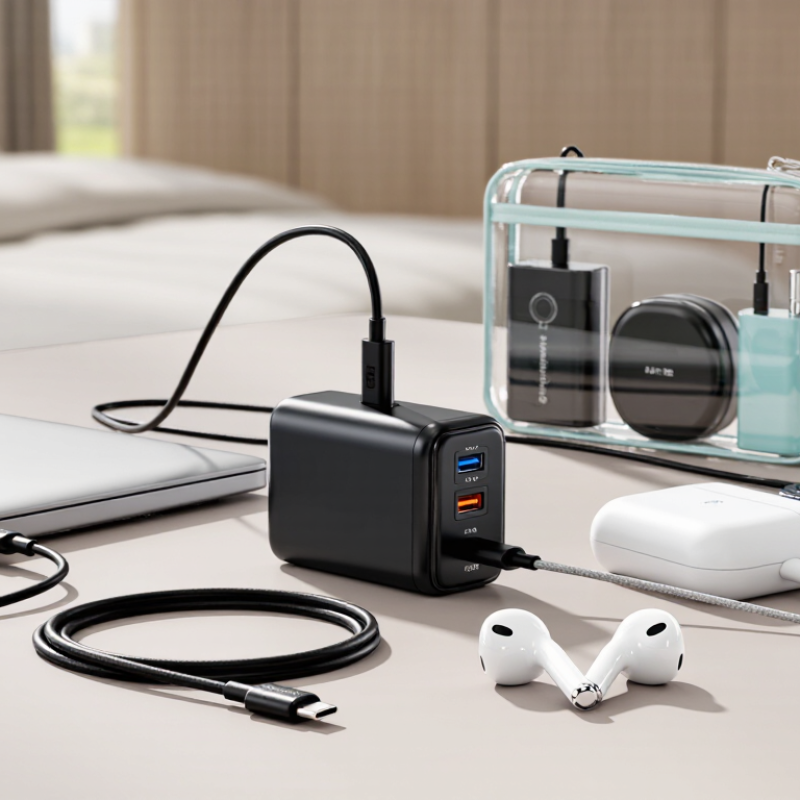
A travel charger is a compact wall adapter for charging phones, tablets, laptops, and other devices. It converts outlet electricity into a safe USB output. Power output matters because every device accepts a limited charging rate. Too little power means slow charging. Excess power does not automatically mean faster charging.
IDC’s Worldwide Quarterly Mobile Phone Tracker recorded about 1.24 billion smartphone shipments in 2024. Travelers now carry more devices, not fewer. A practical charger should match the largest device in your bag. Many phones work well with 20W to 30W. Tablets often need 30W to 45W. Lightweight laptops may require 45W to 100W. Check the original device specification, because these ranges are not universal. I once selected a charger by port count alone. That shortcut failed.
The USB Implementers Forum’s Power Delivery Revision 3.1 specification supports power levels up to 240W, but most travelers do not need that maximum. Higher output can increase size, heat, and cost. GSMA’s Mobile Economy 2025 report estimates 4.7 billion people used mobile internet services in 2024, showing how central portable devices have become. Look for clear wattage labels and independent safety testing. Also check shared output: a 65W charger may provide less power when several devices charge together. That detail is easy to miss.
2026 Best Travel Charger Power: How to Match Wattage With Your Devices
Charger wattage is a ceiling, not a promise. Your device controls its actual power intake. A phone often needs 18–30 watts, while many tablets use 30–45 watts. Thin laptops commonly require 45–100 watts during heavy work. Check the device label or manual before buying. My earlier mistake was trusting the highest number on the box. The charger worked, but the cable limited charging speed. USB-IF’s Power Delivery 3.1 specification supports up to 240 watts, yet most travelers do not need that much power.
Tips: Choose a charger with at least 20% more output than your device’s stated requirement. For a 65-watt laptop, 75–100 watts gives useful headroom. Inspect multi-port ratings carefully. A charger may advertise 100 watts, but split that power across three devices. Also match the cable’s certified wattage. An underrated cable can reduce speed or interrupt charging.
A practical travel setup may use one 65-watt charger for a laptop and phone. Use separate ports only when the total output remains sufficient. The 2024 Global E-waste Monitor, published by UNITAR and ITU, reported 62 billion kilograms of electronic waste in 2022. Only 22.3% was formally collected and recycled. Carrying one suitable charger can reduce unnecessary accessories, though convenience sometimes encourages overbuying. Test the setup at home before departure. A charger that feels hot, disconnects, or charges slowly needs closer inspection.
How to Match Charger Wattage With Your Devices
| Device Category | Typical Maximum Charging Power | Recommended Charger Output | Suitable Travel Charger Type | Expected Charging Use | Important Matching Notes |
|---|---|---|---|---|---|
| Basic mobile phone | 5–18 W | 20–30 W | Single-port USB-C charger | Daily charging and overnight use | A charger with higher wattage is generally safe when the device controls the negotiated power level. |
| Fast-charging smartphone | 25–45 W | 30–45 W | USB-C Power Delivery charger | Fast top-ups during airport or hotel stops | The phone and charger must support a compatible fast-charging protocol to reach the stated speed. |
| Large smartphone or gaming phone | 45–100 W | 65–100 W | High-output USB-C charger | Rapid charging with navigation, gaming, or hotspot use | Maximum speed may require the device’s proprietary charging standard, not only a high wattage rating. |
| Tablet | 18–45 W | 30–45 W | Dual-port USB-C charger | Charging while reading, streaming, or working | A 30 W charger is adequate for many tablets; larger models benefit from 45 W or more. |
| USB-C ultraportable laptop | 30–65 W | 65 W | USB-C PD charger with a dedicated laptop port | Office work, browsing, and travel productivity | Check the laptop’s original adapter rating; a lower-output charger may charge slowly or only maintain battery level. |
| Performance laptop | 90–140 W | 100–140 W | High-power USB-C charger or original AC adapter | Heavy multitasking and content creation | USB-C charging may be limited by the laptop; demanding graphics workloads can still require the original adapter. |
| Wireless earbuds or smartwatch | 2.5–10 W | 10–20 W | Compact USB-C charger or multi-port charger | Low-power overnight charging | These devices draw only the power they need, so a higher-rated charger is usually unnecessary but compatible. |
| Camera or portable gaming console | 15–65 W | 30–65 W | Multi-port USB-C PD charger | Charging batteries between activities | Verify the required voltage and charging profile, especially for camera batteries and dock-connected consoles. |
| Multiple devices at once | Combined demand varies | 65–140 W total | Three- or four-port charger with power allocation | Charging a laptop, phone, tablet, and accessories | Add the devices’ likely simultaneous power needs and confirm the charger’s per-port limits, not only its total rating. |
Choosing the right travel charger starts with its ports, not its advertised wattage. USB-C should be your main port because it supports modern Power Delivery standards. A USB-C Power Delivery port can charge phones, tablets, and many lightweight laptops with one cable. For compatible devices, Programmable Power Supply may improve charging efficiency and reduce heat.
Check the charger’s output profile before buying. A 65W model may provide 45W through one port, then divide power when two devices are connected. That detail matters at an airport. I once packed a compact charger that looked powerful, but its second port slowed my tablet noticeably. I had trusted the total wattage too much.
Tips: Choose at least two USB-C ports for current devices. Keep one USB-A port only if you still carry older cables, earbuds, or accessories. Use cables rated for the charger’s maximum output. Confirm voltage compatibility for laptops and regional outlets. Port labels can be confusing, and manufacturers do not always explain shared power clearly. Take a photo of the specification panel before traveling. It sounds excessive, but it prevents guesswork beside a hotel bed. A charger with fewer ports may be better if each port delivers stable power. Smaller is convenient. Reliable power matters more.
Choosing the best travel charger in 2026 starts with honest power needs, not the biggest number. A compact 65W charger usually handles a phone, tablet, and many lightweight laptops. For heavier laptops, 100W may be safer. USB-IF’s USB Power Delivery specification supports power levels up to 240W, but higher output often means more weight and heat. Size matters in a crowded cabin bag. A charger should fit beside a passport, not dominate the pocket.
Safety deserves equal attention. Look for overcurrent, overvoltage, overheating, and short-circuit protection. Certified testing is more meaningful than vague “fast charging” claims. The European Commission estimates that common-charger rules could save about €250 million annually and reduce roughly 11,000 tonnes of electronic waste. That supports choosing one compatible charger instead of carrying several old adapters. Still, compatibility can be imperfect. Check the charging protocol, cable rating, socket type, and the device’s maximum input. A 100W charger cannot force a phone to accept 100W.
Tips: Test every device before departure. Use a cable rated for the charger’s output. Leave a small power margin. Avoid charging under blankets. I would also question ultra-small designs with unusually high wattage; impressive specifications do not always reveal heat performance. For air travel, confirm current airline rules before packing power banks, especially regarding capacity and cabin storage.
Compare typical minimum USB-C Power Delivery output levels for common travel devices.
Power levels are typical practical minimums for USB-C PD charging. Actual charging requirements vary by device and usage.
Choosing the best travel charger starts with your itinerary, not the largest wattage number. A weekend city trip may need one compact charger for a phone, earbuds, and a tablet. A work journey may require stronger laptop support and several ports. I usually list every device before packing. This simple step prevents an oversized charger from filling valuable luggage space.
Check your devices’ charging requirements carefully. USB-C Power Delivery can support different power levels, but the charger must match your device’s input needs. A 65-watt model may suit a laptop, while a smaller 30-watt option could be enough for phones and tablets. Read the output label, not only the package headline. It matters.
Your route also affects the choice. Confirm the plug shape and local voltage for every destination. A plug adapter may change the connection, but it does not always convert voltage. Choose equipment with recognized safety certification and built-in protection against overheating, overcurrent, and short circuits. I prefer a charger with ports placed apart, because wide cables can block neighboring sockets. Small detail. It helps.
I once packed a powerful charger with only one useful port. It worked, but slowly became inconvenient at an airport gate. A lighter model with two suitable ports would have served me better. Consider hotel outlets, train seats, and crowded cafés. Your ideal charger should fit those real moments, not just a specification sheet.
A travel charger is a compact wall adapter for portable devices. It converts outlet electricity into safe USB power. It can charge phones, tablets, laptops, and earbuds.
Many phones work well with 20W to 30W. Tablets often need 30W to 45W. Lightweight laptops may require 45W to 100W. Check each device’s original specification.
No. A device accepts only its maximum supported input. A 100W charger cannot force a phone to accept 100W. More power may also increase size, heat, and cost.
A 65W charger often handles a phone, tablet, and lightweight laptop. Check its shared output when multiple ports operate. Total power may drop between devices.
Look for overcurrent, overvoltage, overheating, and short-circuit protection. Independent safety testing is useful. Vague “fast charging” claims are not enough.
Use a cable rated for the charger’s output. Check the device’s charging protocol and maximum input. Ports placed farther apart can prevent wide cables from blocking nearby sockets.
List every device before packing. A weekend trip may need one compact charger. A work journey may require laptop support and several ports. Hotel outlets and crowded cafés matter too.
Confirm the plug shape and local voltage. A plug adapter changes the connection, but it may not convert voltage. Test every device before departure. I once chose by port count alone, and that shortcut failed.
Choosing the right travel charger starts with understanding how power output affects charging speed and device safety. How to select the right power for travel chargers depends on the devices you carry, including phones, tablets, laptops, cameras, and wearable accessories. Check each device’s required wattage, then choose a charger that can provide enough total power when multiple devices are connected at once. A charger with adjustable power delivery and modern charging standards can improve efficiency and reduce the need for extra adapters.
Beyond wattage, consider the number and type of ports, including USB-C and USB-A, as well as compatibility with your cables and devices. A practical travel charger should be compact, lightweight, durable, and equipped with protections against overheating, overcharging, and short circuits. Your itinerary also matters: choose a smaller model for short trips and a higher-capacity multi-port option for longer journeys or work travel. The best choice balances power, portability, safety, and everyday convenience.

Laisen Electronic