In today’s fast-paced world, having a reliable car charger is essential for staying connected. Choosing the right one can seem daunting, especially with various vehicle models and charging needs. As John Miller, an industry expert with over a decade of experience, states, “Understanding how to choose the right car charger for different vehicles can make all the difference.”
In the evolving automobile landscape, compatibility is key. Different vehicles have varying electrical systems. Some chargers may not work optimally with your car. So, it’s crucial to ensure the charger fits your vehicle’s specifications. Many drivers overlook this aspect and end up with chargers that underperform or, worse, damage their device.
Additionally, charging speed and safety features are vital considerations. A charger that can rapidly power your devices is advantageous. Yet, high speed can lead to overheating. Balancing speed and safety is essential for protecting both your device and vehicle. Without careful thought, mistakes can easily happen. Therefore, learning how to choose the right car charger for different vehicles becomes an important step in ensuring efficiency and reliability on the road.
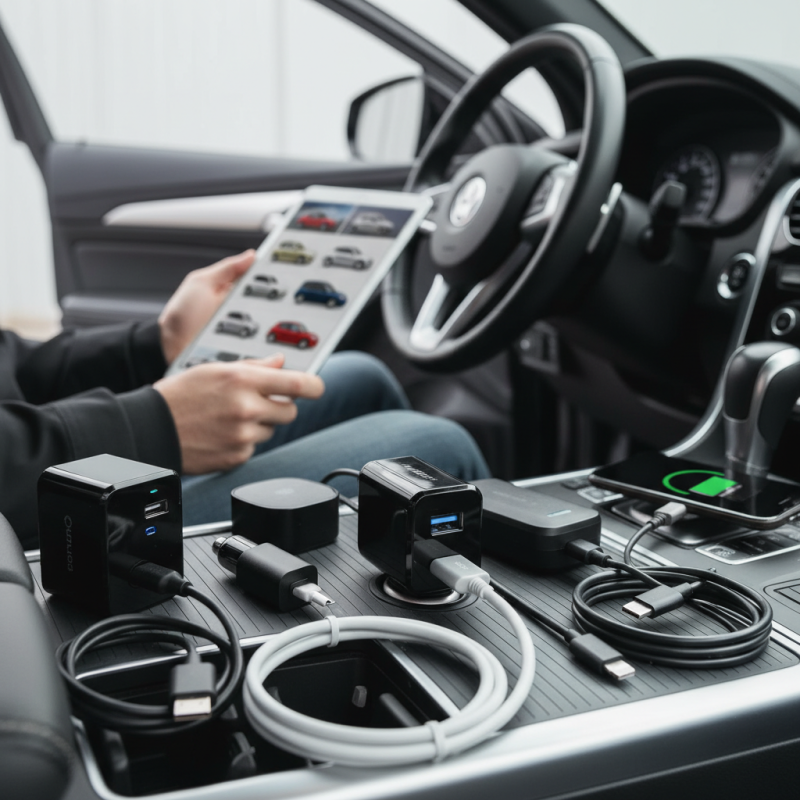
When choosing a car charger, it's vital to understand the types available in the market. There are generally two main types: portable chargers and built-in chargers. Portable chargers are typically small and easy to use. They plug into your car's power outlet and supply power to your devices quickly. However, they can be easy to misplace. Built-in chargers, on the other hand, are integrated into your vehicle's system. They provide a seamless charging experience, but upgrading may be necessary if you want faster charging options.
One important tip is to check the output wattage. A higher wattage means faster charging. You need a charger with at least 2.4A output for smartphones. For tablets, look for something that supports 3A or more. It's often helpful to consider how many devices you’ll charge simultaneously. More USB ports can be convenient, but they may slow down the charging process if used all at once.
Do not overlook compatibility. Some chargers may not work efficiently with specific vehicle systems. Always read reviews before purchasing. Keep in mind that cheaper chargers may not last long. Often, investing a bit more ensures durability.
When choosing a car charger, compatibility is crucial. Not all chargers work with every vehicle model. Your car’s make and year can impact which charger you should buy. Check the specifications of your vehicle’s electrical system. Ensure the charger fits the power requirements without overloading the system.
Consider the types of outlets available in your vehicle. Some modern cars come equipped with USB ports, while others require more traditional 12V adapters. This discrepancy can affect your selection. Additionally, look into fast-charging capabilities. While your car may support it, the charger’s functionality is another story. Reviews and user experiences can guide you here.
It's wise to consult your car's manual for charging compatibility. This document often lists suitable chargers and their specs. However, manufacturers can be vague. Some owners find themselves with non-compatible chargers. Reflecting on these choices can save future headaches. A little research goes a long way in avoiding these pitfalls.
Choosing the right car charger is essential for maintaining your vehicle's battery health and ensuring an efficient charge. The ampere rating of a charger directly affects charging speed. Higher amp ratings can lead to faster charging, but compatibility with your vehicle is crucial. Using a charger with an inappropriate rating can result in overheating or damage.
To determine the best ampere rating, consider your vehicle's requirements and battery capacity. A charger with 2.4A can offer rapid charging for most smartphones and smaller devices. For larger devices or multiple devices, a 3.0A charger might be more suitable. Ensure that your vehicle's charging port can handle the chosen charger’s amperage.
Don't overlook quality. A well-made charger can make a significant difference in performance. It is better to invest in chargers that provide reliable performance than to rely on cheaper options that fail quickly. Remember, a charger should not only charge fast but also be safe to use. In the long run, selecting the proper ampere rating will enhance your overall charging experience in your vehicle.
When selecting a car charger, safety features are paramount. Look for chargers equipped with over-current protection, which prevents excessive current from damaging your device. A report by the Consumer Technology Association found that 30% of smartphone users experience damage from mismatched chargers. This highlights the need for proper safety measures.
Another important feature is short-circuit protection. This safeguards both your devices and the vehicle's electrical system. Many chargers now include this feature due to increasing reports of electrical failures. As for temperature control, choose chargers with built-in thermal management, reducing the risk of overheating, which can be common in poorly designed products.
Tips: Opt for chargers that reflect high-quality materials and certifications. Chargers meeting international safety standards are less likely to fail. Remember, investing in a reliable charger could save you from expensive repairs down the line. Always read user reviews to gauge the real-world performance of safety features.
When choosing a car charger, portability and design are key factors. You want a charger that fits seamlessly into your vehicle's layout. Look for a compact design that doesn’t obstruct your console or impede access to other controls. A sleek, minimalistic charger can add to the aesthetic of your car while ensuring functionality.
Consider the length of the charging cable. Too short of a cable may limit where you can place your device. A longer cable can offer flexibility but might lead to a cluttered space. Aim for a balance where your device stays charged without causing distractions while you drive.
Before you make a purchase, check the compatibility with your devices. Not all chargers work with every gadget. Reading reviews can also provide insight into design flaws others have encountered. You may find that a charger looks great but fails in performance. Reflecting on these aspects helps you avoid potential disappointments and find the right fit for your needs.
: There are portable chargers and built-in chargers.
They plug into the car's power outlet. They are small and easy to use.
They offer a seamless experience. However, upgrading may be needed for faster options.
Higher wattage means faster charging. Check for at least 2.4A for smartphones.
You can charge multiple devices. But using many USB ports may slow down charging.
Some chargers may not work well with specific vehicle systems. Always check reviews.
It can lead to overheating or damage. Choose based on your vehicle's requirements.
Invest in well-made chargers. Cheaper options may fail quickly.
Look for a charger that supports 3.0A or more for better performance.
No, safety is crucial too. A charger should charge fast and be safe to use.
Choosing the right car charger for your vehicle is essential to ensure efficient and safe charging. Understanding the different types of car chargers available in the market is the first step. It’s important to ensure that the charger is compatible with your vehicle model to avoid any electrical issues. Additionally, consider the charging speed by checking the ampere rating of the charger, as this can significantly impact how quickly your devices charge.
When determining how to choose the right car charger for different vehicles, safety features should also be a priority. Look for chargers that offer over-current, over-voltage, and short-circuit protection. Lastly, the design and portability of the charger matter, especially if you need it for travel. Finding a charger that fits your requirements ensures you have a reliable power source on the go.

Laisen Electronic