Choosing the right power adaptor for medical equipment is crucial. A reliable power source can ensure the safety and functionality of devices. The medical industry demands high standards, as even minor issues can lead to significant consequences.
When selecting a power adaptor, consider compatibility. Many devices require specific voltage and current ratings. Failing to match these specifications can cause malfunction. Researching the manufacturer's recommendations is essential. It helps you avoid potential hazards and ensures optimal performance.
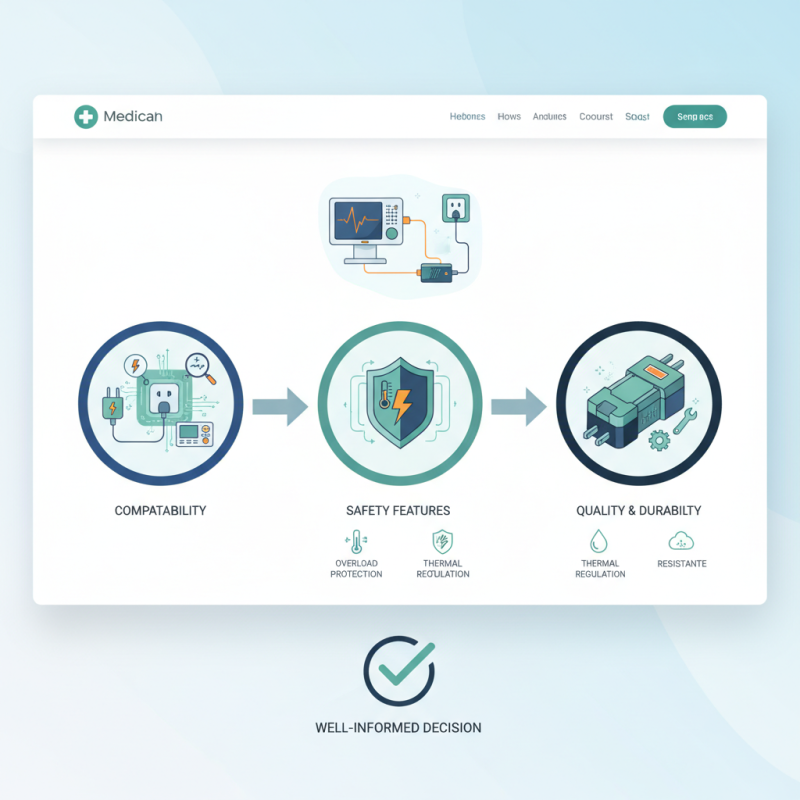
Also, prioritize safety features. Look for adaptors with overload protection and thermal regulation. These features are vital for preventing overheating. Lastly, assess the quality of materials used in the adaptor’s construction. A durable and reliable product can withstand the demands of a medical environment. Carefully evaluate all these factors to make an informed decision on how to choose the right power adaptor for medical equipment.
When selecting a power adaptor for medical equipment, understanding power requirements is critical. Medical devices can vary widely in terms of voltage, current, and power ratings. A 2021 report from the International Electrotechnical Commission (IEC) highlights that improper power supply can lead to equipment malfunction. This can jeopardize patient safety.
Most medical equipment requires a stable power supply to function correctly. Voltage fluctuations can cause device failure or inaccuracies in readings. According to a recent survey, 70% of medical professionals reported experiencing issues related to power supply. Ensuring compatibility with the device’s specifications is necessary. Always check the manufacturer’s guidelines for voltage and amperage requirements.
Additionally, overloading an adaptor can result in overheating. This poses risks not only to the equipment but also to patients. A study published in the Journal of Medical Engineering emphasizes the importance of choosing adaptors that meet or exceed the required ratings. Using subpar adaptors could lead to unexpected downtimes or failures during critical treatments.
When selecting power adaptors for medical devices, understanding the types available is crucial. Medical equipment often requires specific adaptors that comply with safety standards. There are mainly two types: Class II and Class I adaptors. Class II adaptors are fully insulated and do not need a protective earth. They are often used in portable devices.
Class I adaptors, on the other hand, require earthing and are suitable for more stationary equipment.
According to the International Electrotechnical Commission (IEC), power adaptors for medical use must meet strict guidelines. Reports indicate that over 80% of medical device failures are linked to inappropriate power supplies. Therefore, selecting the correct adaptor is vital for patient safety. Considerations include the voltage, current requirements, and compatibility with the device. Devices needing higher reliability often use adaptors with backup battery features.
Not all adaptors are suitable for every environment. For instance, some devices may experience failures in high EMI (electromagnetic interference) areas. This can affect performance and safety. Always check certifications like UL60601 or IEC 60601 for assurance of safety and reliability. The right choice could prevent critical errors in medical settings.
When selecting a power adaptor for medical equipment, key features should guide your choices. Safety certifications are paramount. Ensure the adaptor complies with industry standards like IEC 60601. This compliance assures you of its safety and reliability in critical environments.
Output voltage and current ratings need to match the equipment’s specifications. An incorrect voltage can damage sensitive machinery. It’s crucial to verify these ratings to prevent costly errors and potential hazards.
Consider the durability of the adaptor. Medical environments often face challenges like spills and drops. A robust, water-resistant design can help prevent interruptions in vital services. Pay attention to the warranty offered. A longer warranty may indicate a manufacturer’s confidence in their product's quality. Reflect on these aspects to ensure careful selection.
| Feature | Description | Importance Level |
|---|---|---|
| Voltage Compatibility | Ensure the adaptor matches the voltage requirements of the medical equipment. | High |
| Current Rating | Check the current rating is sufficient to power the device without causing overheating. | High |
| Safety Certifications | Look for certifications like UL, CE, or TUV indicating compliance with safety standards. | Critical |
| Size and Weight | Consider the size and weight for portability, especially for portable medical devices. | Medium |
| Output Connector Type | Ensure the connector type fits the medical device perfectly to avoid connectivity issues. | High |
| Temperature Range | Check if the adaptor can operate efficiently within the necessary temperature range. | Medium |
| Warranty and Support | Consider the warranty period and support offered by the manufacturer. | Medium |
When choosing power adaptors for medical equipment, understanding safety standards is critical. Medical power adaptors must meet stringent safety requirements. For instance, IEC 60601 is the international standard that relates to the safety of medical electrical equipment. It emphasizes the need for adaptors to have protection against electrical shock and ensure reliable operation in a clinical setting.
Certified power adaptors often carry CE marking in Europe and UL listings in the United States. These certifications indicate that the products have undergone rigorous testing. According to a 2023 report by the International Electrotechnical Commission, over 30% of medical equipment failures can be traced back to inadequate power supply. This highlights the importance of using compliant adaptors.
In addition to compliance, consider the specifics of your medical devices. The adaptor must provide the correct voltage and current levels. A mismatch can lead to device malfunction. Regular audits and checks of power adaptors can ensure ongoing compliance, yet surprisingly, many facilities neglect this aspect. The goal should always be to prioritize safety and reliability in healthcare environments.
When it comes to maintaining power adaptors for medical equipment, attention to detail is crucial. Regular inspection is essential. Look for frayed wires or discoloration. These can indicate potential failure. Clean the adaptor and its connectors periodically. Dust and debris can compromise functionality.
Using the correct voltage is vital. An adaptor supplying too much or too little voltage can damage equipment. Always check specifications before use. This simple step can prevent costly repairs.
Keep adaptors in a dry and cool environment. Excessive heat can affect performance. Avoid using adaptors in damp areas, as moisture can lead to corrosion. Finally, review the user manual for maintenance guidelines specific to your equipment. Regular updates can keep your adaptors performing optimally.
This chart illustrates key factors to consider when choosing a power adaptor for medical equipment, along with their respective importance ratings. Ensuring the right adaptor can significantly affect the performance and safety of medical devices.
: Incorrect power supply can lead to device malfunction, risking patient safety.
Voltage fluctuations may result in device failure or inaccurate readings.
Safety certifications ensure reliability and compliance in critical environments.
Subpar adaptors can cause unexpected downtimes or failures during crucial treatments.
Overloading an adaptor can lead to overheating, endangering both equipment and patients.
IEC 60601 ensures protection against electrical shock and reliable operation.
Medical settings face spills and drops, so robust adaptors reduce service interruptions.
Regular audits and checks for compliance with power adaptors are frequently neglected.
Mismatched voltage can damage sensitive machinery, causing costly errors.
Matching these ratings prevents harmful device malfunctions and enhances safety.
Choosing the right power adaptor for medical equipment is crucial to ensure optimal performance and safety. First, it’s important to understand the specific power requirements of the medical devices you intend to use, including voltage and current specifications. Familiarizing yourself with the types of power adaptors suited for medical devices can help streamline the selection process.
When evaluating power adaptors, consider key features such as efficiency, durability, and compatibility with your equipment. Additionally, ensure that the adaptors comply with relevant safety standards and certifications to minimize risks during operation. Regular maintenance is also essential to guarantee that the adaptors function effectively over time, contributing to the overall reliability of the medical equipment. By following these guidelines, you can make informed decisions on how to choose the right power adaptor for medical equipment.

Laisen Electronic