Top Factors That Affect Power Adapter Charging Speed?

Time:2026-05-03 Author:Madeline
0%

When it comes to charging devices, the speed at which power adapters operate is critical. "What factors affect the charging speed of power adapters?" is a question that arises frequently among users and tech enthusiasts alike. According to Dr. Emily Carter, an expert in electrical engineering, "Understanding the nuances of charging technology can change how we interact with our devices." This statement underscores the importance of exploring the various elements that contribute to charging efficiency.

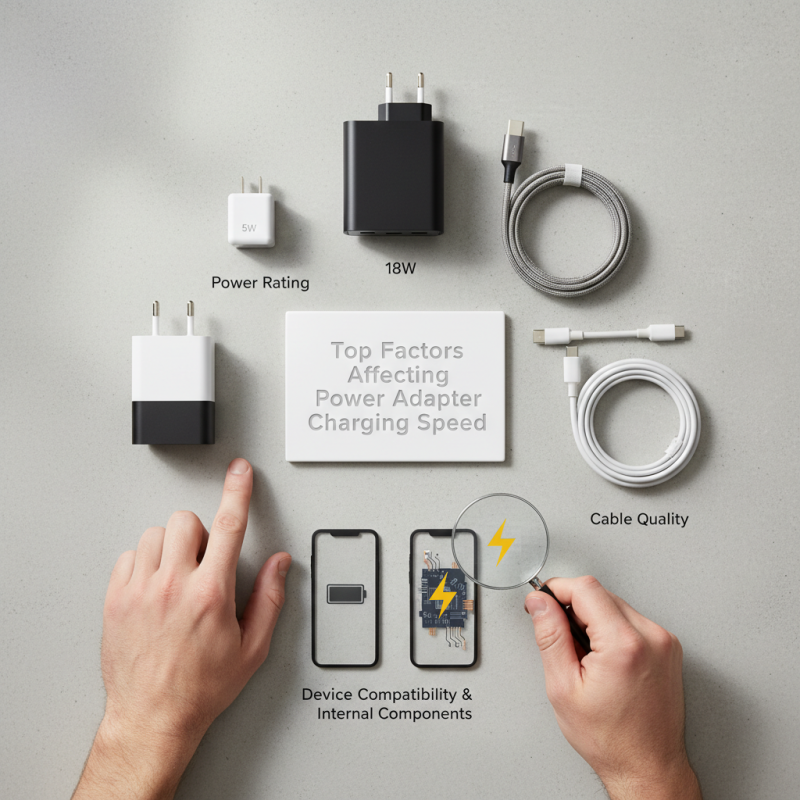
Charging speed can be influenced by several factors, such as the power rating of the adapter, the cable quality, and the compatibility with the device. Different adapters offer varied wattage levels, which can significantly impact charging times. Furthermore, using high-quality cables ensures optimal power transfer. Many consumers overlook these variables and settle for basic options, leading to frustration.

The device's internal components also play a vital role. Some devices are designed to accept higher power levels than others. Users must consider these aspects for improved performance. While advancements in technology have provided innovative solutions, many remain unaware of how these factors interplay. Reflecting on this knowledge can enhance user experience and promote better practices when choosing power adapters.
Top Factors That Affect Power Adapter Charging Speed?

Types of Power Adapters and Their Impact on Charging Speed

When considering how quickly a device charges, the type of power adapter plays a crucial role. Different adapters come with varying power outputs measured in watts. A higher wattage often translates to faster charging. For instance, a 65W charger typically charges a device more quickly than a 30W charger. However, many devices are designed to accept a certain amount of power. If the device can only handle 30W, using a 65W adapter will not yield faster charging.

Moreover, the connector type can affect the charging speed. USB-C and proprietary connectors often allow for higher power transfer rates compared to older USB standards. This means that an adapter with a USB-C connection and higher output can significantly speed up charging. Yet, not all cables are created equal. A lower quality cable may restrict charging speed, even when using a capable adapter.

Another often overlooked factor is the device's battery management system. Some devices manage power intake based on their current battery level. Charging could slow down as the battery approaches full capacity. This is a normal behavior but can be frustrating. Users should be aware that while a high-capacity charger may seem ideal, the efficiency also depends on how the device's system interacts with that power.

Voltage and Current Ratings: Understanding Their Role in Charging

Understanding voltage and current ratings is essential for optimizing charging speed. Voltage measures the potential energy driving the current in a circuit. A higher voltage can deliver more power. However, it’s crucial that devices are designed to handle specific voltage levels. If voltage ratings exceed the device's limit, it can lead to overheating or damage.

Current ratings, defined in amperes (A), represent the flow rate of electric charge. Higher current ratings generally mean faster charging. According to a report by the International Electrochemical Society, devices that operate at 2A charge 50% quicker than those at 1A under similar voltage conditions. However, compatibility between the charger and the device is vital. Using a higher current charger does not guarantee faster charging if the device cannot accommodate it.

Many users overlook the importance of this compatibility. Using a high-capacity charger on devices not built for it may lead to ineffective charging. Errors in judgment can lead to prolonged charging times, reduced battery lifespan, or even device failure. A balanced approach that considers both voltage and current ratings is required for optimal performance. Users must reflect on their choices to improve their device's efficiency.

Cable Quality and Length: How They Influence Efficiency

When it comes to charging speeds, the quality of the cable you use plays a crucial role. A high-quality cable can transmit power more efficiently, reducing charging time significantly. On the other hand, a subpar cable might cause resistance, leading to wasted energy and slower charging. This subtle difference can be the difference between waiting hours and minutes to power up your device.

Length also matters in this equation. Shorter cables typically provide lower resistance and thus facilitate faster charging. Longer cables may lead to voltage drops. These drops can slow down the charging process, especially if the cable is poorly designed. Consider this—your device could be plugged in for what seems like forever, but if the cable is too long or of low quality, you might not see it fully charged.

It's essential to invest in cables that promise both durability and efficiency. However, even the best cables can have their drawbacks. A rigid cable may suffer more damage over time, leading to intermittent charging. Such imperfections remind us that while we seek perfection in charging speeds, we should also acknowledge the need for regular checks. After all, a charging issue might not solely be attributed to the adapter itself.

Device Compatibility: Matching the Adapter to Your Device

Device compatibility plays a crucial role in charging speed. When an adapter is not properly matched to a device, charging times can significantly increase. According to industry reports, mismatched power ratings lead to inefficiencies. For instance, using a lower wattage adapter can extend charging time by up to 50%. Devices have specific voltage and current requirements, and inconsistency can hinder performance.

Choosing the right adapter involves checking the device's specifications. Ensure the voltage output matches that of your device. Always consult the user manual for recommendations. Many users overlook this and experience frustratingly slow charging.

Tips: Always verify the wattage of the adapter. A mismatched adapter may also lead to overheating issues. Inspect the connector type; not all ports are universal. You may find that certain cables limit charging speed as well. Keep an eye on these details to enhance efficiency.

Impact of Device Compatibility on Power Adapter Charging Speed

Environmental Factors: Temperature and Its Effect on Charging Speed

Temperature significantly impacts power adapter charging speed. A study by the Institute of Electrical and Electronics Engineers (IEEE) shows that optimal charging occurs between 20°C to 25°C. At these temperatures, the chemical reactions inside lithium-ion batteries proceed efficiently. When temperatures soar above 35°C, charging speed can slow down. This occurs due to overheating protection mechanisms triggered within the battery.

On the other hand, cold environments below 0°C can also hinder the charging process. In low temperatures, internal resistance in batteries increases, leading to slower charging rates. Research indicates that charging a lithium-ion battery in freezing conditions can result in a 30% reduction in charging speed. Additionally, batteries may become less effective over time if frequently charged in extreme temperatures.

Practical experience shows that many users do not consider the ambient temperature when charging their devices. Often, people plug in their devices without realizing the negative impact of high heat or freezing conditions. Awareness of these environmental factors could lead to better charging practices and longer battery life.

Top Factors That Affect Power Adapter Charging Speed

Factor Temperature Range (°C) Charging Speed (mA) Effect on Speed
Cold Temperature 0 - 10 300 Decreases efficiency due to increased resistance.
Room Temperature 20 - 25 1000 Optimal charging speed with minimal resistance.
Warm Temperature 26 - 35 800 Charging speed decreases slightly due to thermal effects.
High Temperature 36 - 45 600 Significantly reduces speed to prevent overheating.
Overheating Above 45 0 Charging stops to protect the device.

FAQS

: What role does the power adapter play in charging speed?

: The type of power adapter greatly influences charging speed. Higher wattage typically leads to faster charging.

Can using a higher wattage adapter damage my device?

Not necessarily. If your device only accepts a certain wattage, it won't charge faster with a higher adapter.

How does the connector type affect charging speed?

USB-C connectors usually allow for higher power transfer rates compared to older USB types, improving charging speed.

Why is cable quality important for charging efficiency?

High-quality cables transmit power more efficiently, while low-quality ones can cause resistance and slower charging.

Does cable length affect charging speed?

Yes, shorter cables tend to have lower resistance. Longer cables can cause voltage drops and slow down charging.

What happens when my device's battery approaches full capacity?

Charging may slow down as the battery nears full capacity. This is normal behavior and can be frustrating.

Should I regularly check my charging cables?

Yes, it’s essential to inspect cables regularly. Damage to the cable can lead to charging problems, despite using a good adapter.

Can a high-quality adapter still charge slowly?

Yes, if the device's battery management system restricts power intake, a high-quality adapter may not speed up charging.

Are there downsides to using rigid cables?

Rigid cables can suffer from wear and tear over time, leading to intermittent charging issues.

Is it worth investing in premium cables?

Yes, premium cables can improve charging efficiency, but even they have potential drawbacks that need monitoring.

Conclusion

When considering what factors affect the charging speed of power adapters, several key elements come into play. Firstly, the type of power adapter and its voltage and current ratings significantly determine how quickly a device can be charged. Higher voltage and current ratings typically lead to faster charging, provided that the device is compatible with these specifications.

Additionally, the quality and length of the charging cable are crucial; high-quality cables with appropriate lengths minimize resistance and loss of power, thus enhancing charging efficiency. Device compatibility is also vital, as using an adapter that matches the device's requirements ensures optimal charging speed. Lastly, environmental factors such as temperature can impact the performance of both the adapter and the device being charged, further influencing overall charging speed. Understanding these components can aid users in optimizing their charging experiences.

Madeline

Madeline

Madeline is a dedicated marketing professional with a wealth of expertise in our company's core offerings. With a keen understanding of the industry, she brings a unique perspective to her role, consistently delivering high-quality content that highlights the superior aspects of our products. As......