5 Best Reasons Medical Power Adapters Differ From Regular Ones

Time:2026-11-06 Author:Henry
0%

Medical equipment may run beside a patient for hours, in a clinic, or at home. The adapter behind it can affect electrical safety, electromagnetic performance, and dependable operation. That is why a medical power adapter is not simply a consumer charger with a different label. Why is medical power adaptor different from ordinary adaptors? The answer involves design, testing, and compatibility with specific equipment. Some differences are hidden inside the casing. They still matter.

This introduction looks at five practical reasons: patient protection, insulation and leakage-current controls, electromagnetic compatibility, reliability under regular use, and documented suitability for a particular device. Requirements can vary by product and market, so “medical grade” alone does not prove that an adapter fits every medical device. Check the equipment maker’s specifications and the adapter’s markings. A label can help, but it is not the whole story. Even a well-designed unit may be unsuitable if its voltage, connector, or operating conditions do not match. That detail is easy to overlook. It deserves a second look.

The goal is not to make ordinary adapters sound careless; many serve their intended uses well. Medical applications, however, can involve closer patient contact and more demanding safety considerations. Understanding the five differences helps buyers and technical teams ask better questions before choosing a replacement. When doubt remains, confirm compatibility with the manufacturer or a qualified service professional.
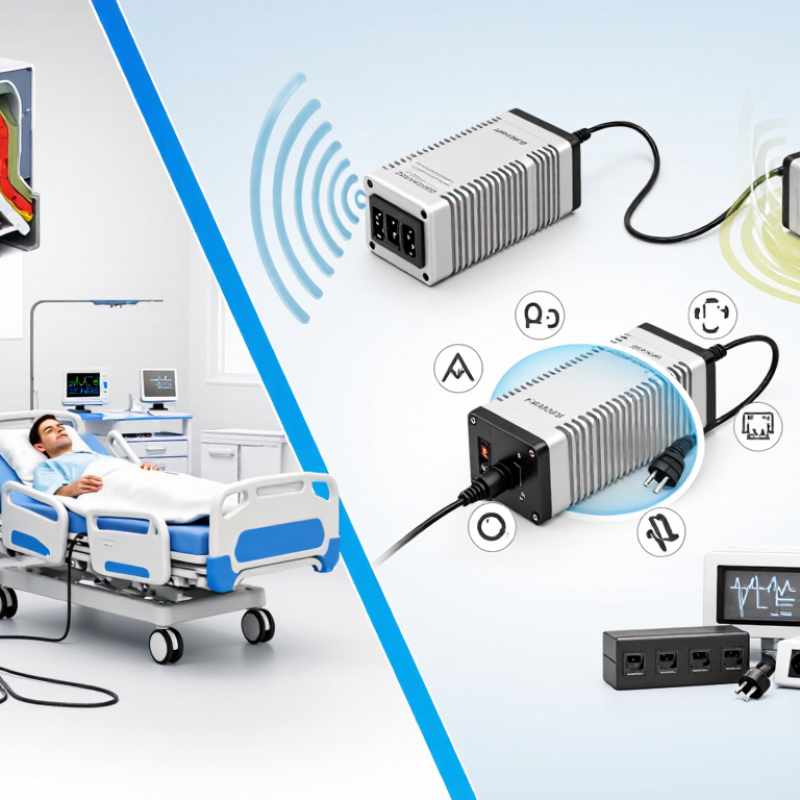
5 Best Reasons Medical Power Adapters Differ From Regular Ones

How Medical Power Adapters Meet Stricter Electrical Safety Standards

Medical power adapters are designed around patient and operator safety, not just reliable voltage output. Their insulation and internal barriers help limit electric shock risks if a fault occurs. Designers also consider leakage current, the small amount of electricity that may pass through insulation. In clinical settings, even a tiny current deserves careful control.

Clearance and creepage distances matter, too. These are the spaces through air and along surfaces between conductive parts. Medical equipment may require greater separation and more rigorous testing than ordinary electronics. Applicable requirements depend on the device and intended use, so check its documentation rather than assuming every adapter meets the same standard. Small details matter. A familiar-looking plug proves very little.

Tips: Match the adapter’s output voltage, current, polarity, and connector to the equipment specifications. Look for documentation identifying the relevant medical electrical safety testing, such as IEC 60601-1 where applicable. Keep the adapter dry, inspect its cable for cracks, and replace damaged units through qualified service channels. Don’t improvise.

Safety is also a system issue. The adapter, connected device, and surrounding setup all affect performance. Electromagnetic compatibility testing helps reduce interference, but placement and nearby equipment can still matter. It is easy to focus only on wattage. That can be an incomplete check.

Why Patient Protection Requires Enhanced Isolation

5 Best Reasons Medical Power Adapters Differ From Regular Ones
Why Patient Protection Requires Enhanced Isolation
Medical power adapters are designed to help reduce electrical hazards around patients and clinical equipment. Their enhanced isolation separates the power source from accessible circuits. This barrier helps limit leakage current if an internal fault occurs. Small amounts matter. A patient connected to monitoring electrodes may be more vulnerable to current than someone simply using a household device. Isolation is not a magic shield; safety depends on the complete equipment system, its condition, and correct use.
Medical-grade designs may use reinforced insulation, greater spacing between conductive parts, and tighter leakage-current controls. These features are assessed against applicable medical electrical safety requirements, such as IEC 60601-1. Requirements can vary with the device and how it contacts the patient. An adapter that looks sturdy is not necessarily suitable for medical use. Check the equipment maker’s specifications and the adapter’s labeling. A mismatch can undermine the protection the equipment was designed to provide.
Tips: Confirm the required output voltage, current, and connector before use. Inspect the cable and housing for cracks or wear. Keep the adapter dry, and replace damaged units through an appropriate service channel. It is easy to focus on the power rating alone; isolation and compatibility deserve equal attention.

How Leakage Current Limits Reduce Electrical Risk

Leakage current is the small electrical current that can escape an adapter through insulation or internal components. In ordinary electronics, tiny amounts may be acceptable. Medical equipment needs tighter control because a patient may be connected to sensors, cables, or other conductive parts. A damp hand, worn cord, or damaged connector can make a small fault more concerning. Small currents matter.

Medical power adapters are designed and tested to limit this current under defined operating and fault conditions. Insulation, spacing between circuits, grounding, and filtering all affect the result. More filtering is not automatically safer; some components can increase leakage, so engineers must balance noise control with patient protection. Medical electrical safety standards set requirements that vary with equipment type and how it contacts the patient. In practice, the exact limit depends on that classification. A single measurement cannot prove an adapter is safe in every situation. It can miss a damaged cable or a fault that appears only under certain conditions. That detail is easy to overlook. Equipment should be used with its specified power adapter, and damaged parts should be checked by qualified service personnel.

5 Best Reasons Medical Power Adapters Differ From Regular Ones

How leakage current limits reduce electrical risk

IEC 60601-1 sets lower AC patient-leakage current limits for Type CF applied parts than for Type BF applied parts. The values shown are limits in microamperes, not typical measured adapter outputs; actual compliance depends on the complete medical electrical equipment and its applied part.

Why Medical Environments Demand Greater Reliability

Medical power adapters differ because a voltage problem can interrupt observation, treatment, or communication. In a clinical room, equipment may run for hours beside a patient. The adapter must provide stable output despite ordinary changes in load and temperature. Small details matter. Connector fit, cable strain relief, and heat buildup can all affect dependable operation.

Electrical safety is a central concern. Medical-grade designs are assessed for factors such as insulation, leakage current, and protection against faults. The exact requirements depend on the equipment and its intended use, so compatibility should be checked against the device documentation. A familiar plug is not proof of a safe match. Nor is a higher wattage rating automatically better.

Reliability also means tolerating daily handling. An adapter may be moved between rooms, tugged near a bed, or exposed to repeated cleaning. A loose connector can cause brief power drops that are easy to miss. That is not enough. Clear labeling and traceable specifications help staff identify the correct supply and replace it consistently. Still, no adapter is maintenance-free, and a robust design cannot compensate for damaged cables or poor storage. A quick visual check can catch cracks, bent pins, or unusual warmth before they become operational problems.

How Compatibility Requirements Shape Medical Adapter Design

A medical power adapter must match more than a plug. Its output voltage, current capacity, connector size, and polarity must suit the specific device. A connector that fits can still deliver the wrong power. Check the device label and service documentation before selecting a replacement. Small details matter.

Patient-care settings add stricter design demands. Medical adapters may require carefully controlled leakage current, electrical isolation, and electromagnetic compatibility, depending on the device and applicable standards. These features help reduce electrical risks and prevent interference with nearby equipment. They also affect internal components, insulation, and testing. The exact requirements vary by device and market, so “medical grade” alone does not prove suitability.

Physical conditions matter, too. An adapter used beside a treatment bed may face frequent handling, tight cable bends, and routine cleaning. Housing strength and cable durability can therefore influence compatibility in daily use. I have seen people focus on voltage and overlook the cable arrangement; that is an easy mistake. Confirm the approved adapter specifications with the device manufacturer or a qualified biomedical technician. Never assume that a similar-looking unit is interchangeable.

FAQS

Why do medical power adapters use enhanced isolation?

Enhanced isolation separates the power source from accessible circuits. It helps limit leakage current if an internal fault occurs. Not a magic shield.

Why does leakage current matter to patients?

Patients connected to electrodes or conductive cables may be more vulnerable to small currents. A damp hand or worn cord can increase concern.

Can any sturdy-looking adapter power medical equipment?

No. Check the equipment documentation, output voltage, current, connector, and adapter labeling. A familiar plug does not prove compatibility.

Does a higher wattage rating make an adapter safer?

Not necessarily. Correct output and electrical isolation matter too. I used to focus only on wattage; that was incomplete.

What affects an adapter’s leakage current?

Insulation, circuit spacing, grounding, and filtering all play a role. More filtering is not automatically safer.

What should I inspect before using an adapter?

Look for cracks, worn cables, bent pins, loose connectors, and unusual warmth. Keep the adapter dry. Small details matter.

Can one safety measurement prove an adapter is safe?

No. A single measurement may miss cable damage or faults that appear only under certain conditions. That detail is easy to overlook.

How can staff support reliable operation?

Use the specified adapter, store it carefully, and replace damaged units through an appropriate service channel. A quick visual check helps, but it cannot replace qualified inspection.

Conclusion

Medical power adapters differ from ordinary adapters because they are designed for environments where electrical safety and dependable operation directly affect patient care. Why is medical power adaptor different from ordinary adaptors? The key reasons include stricter safety requirements, enhanced electrical isolation, and tighter limits on leakage current. These features help reduce the chance that electrical faults or unintended current could pose a risk to patients or healthcare workers.

Medical settings also demand equipment that can operate reliably during extended use and under varied conditions. Compatibility is another important consideration: an adapter must deliver suitable power and connect correctly with the intended medical device. Together, these requirements shape a design focused not only on supplying electricity but also on supporting safe, stable, and consistent device performance in patient-care environments.

Henry

Henry

Henry is a dedicated marketing professional with a profound expertise in the company's offerings. With years of experience in the industry, he possesses an impressive understanding of the market dynamics and consumer behaviors that drive success. Henry is committed to sharing his insights through......