Why is PD Charging Superior to Regular USB Charging?

Time:2026-05-25 Author:Sophia
0%

In today's fast-paced digital world, charging speed and efficiency matter. Many users wonder, "Why is PD charging better than regular USB charging?" This question is crucial for anyone relying on technology. Power Delivery (PD) charging offers significant advantages over traditional USB charging methods. It enables faster charging times and improved power management.

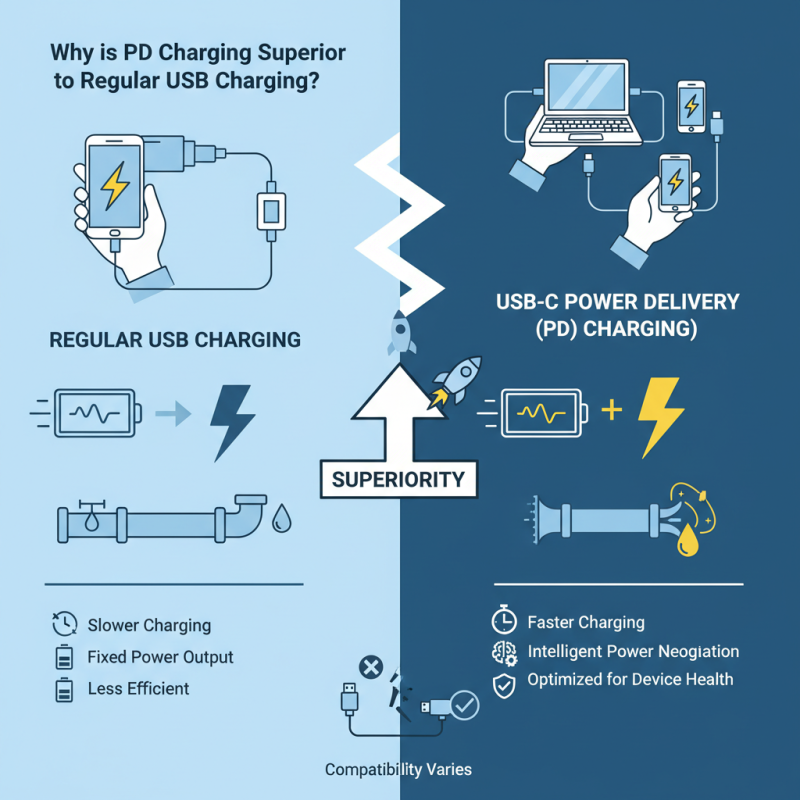
With PD charging, devices can negotiate power levels. This means devices receive the optimal amount of power they need. Standard USB charging usually provides a fixed output, which can be inefficient. As a result, PD charging reduces battery strain, potentially extending the lifespan of your devices.

However, not all devices support PD charging. This can create confusion for consumers. Not every cable or charger is compatible, leading to mismatched expectations. Despite these challenges, the benefits of PD charging remain compelling. Understanding these differences can help users make informed decisions about their charging needs.
Why is PD Charging Superior to Regular USB Charging?

Benefits of PD Charging Over Traditional USB Charging

Power Delivery (PD) (PD) charging is rapidly emerging as a preferred option over traditional USB charging methods. One major advantage of PD charging is its ability to deliver higher power levels. While regular USB ports typically provide 2.5 to 5 watts, PD can offer up to 100 watts depending on the device. This means that larger devices, such as laptops, charge significantly faster.

Another benefit is versatility. PD supports a range of devices from smartphones to laptops. This universal compatibility streamlines the charging process. Users only need one cable for various devices. It enhances convenience and reduces the need for multiple chargers. However, achieving this versatility relies on both the charging device and the cable supporting PD technology.

Tips: Always check if your charging cable is PD compatible. Using non-PD cables may limit the charging speed. Also, consider investing in a PD charger for your devices. It can save time and enhance efficiency.

Despite its benefits, users should reflect on their setup. Not all devices need high-speed charging. For example, charging a smartphone overnight may not require PD. It's essential to tailor the charging experience to actual needs. Balancing the speed with device requirements creates a more sustainable usage practice.

How PD Charging Achieves Faster Power Delivery

Power Delivery (PD) charging significantly enhances the speed of power delivery. Unlike regular USB charging that offers a maximum of 2.5 watts, PD can deliver up to 100 watts. This structure is not only about speed but also efficiency. PD utilizes smart communication between devices to negotiate the best power levels. This allows devices to charge faster without overheating.

PD charging achieves this through a protocol that supports variable voltage levels. Traditional USB chargers typically operate at a fixed voltage, which limits the charging speed. In contrast, PD can adjust its output voltage, ranging from 5V up to 20V. Such flexibility benefits a wide array of devices, from smartphones to laptops. The smarter charging also extends battery life by managing the energy flow more effectively.

In practice, users might notice varied experiences with PD charging. Some devices may not support the higher power levels of PD, resulting in slower charge times. Additionally, using non-compliant cables may limit performance. While PD technology advances rapidly, understanding these potential limitations is crucial. Embracing PD charging requires a mix of awareness and adaptation to maximize benefits.

Technical Mechanisms Behind PD Charging

Power Delivery (PD) charging stands out due to its advanced technical mechanisms. This technology delivers higher power levels than regular USB charging, allowing devices to charge faster. According to a recent industry report from the International Electrotechnical Commission, PD can provide up to 100 watts of power. In comparison, traditional USB-A ports usually max out around 2.5 watts. This difference is significant for power-hungry devices like laptops and tablets.

One key aspect of PD charging is its ability to negotiate power requirements dynamically. Devices communicate their power needs through a protocol established in the USB Power Delivery specification. This exchange allows for optimization. For example, charging a smartphone might require 5 watts, while charging a laptop could require 60 watts or more. Such adaptability ensures efficient energy transfer, minimizing wasted power.

Moreover, the implementation of PD charging can sometimes lead to confusion. Not all cables and chargers support PD. Users may encounter slow charging speeds if they connect with incompatible devices. A study by the USB Implementers Forum revealed that over 30% of users experience inefficiencies due to mismatched charging equipment. Consumers need to be aware of this to take full advantage of PD capabilities.

Compatibility and Versatility of PD Charging Standards

USB Power Delivery (PD) charging has become a game-changer in our tech-centric world. One of its main advantages is compatibility. PD charging can adapt to various devices, from smartphones to laptops. This flexibility allows users to rely on a single charger for multiple gadgets. Many users appreciate this convenience. However, not all devices support PD charging standards.

Versatility is another highlight of PD charging. It uses smart negotiation between the charger and the device to determine the optimal power level. This means faster charging without the risks associated with overloading. While many higher-end devices benefit, some budget-friendly options may lack this feature. Users might find themselves in a situation where their device does not charge quickly despite using a PD charger.

Many people underestimate the importance of understanding charging standards. Awareness can prevent frustrations from using the wrong charger. Users should also consider the implications of using non-compliant accessories. These can affect not only charging speed but also device safety. Embracing PD charging is beneficial, but it is crucial to recognize its limits and broader context in daily tech use.

Why is PD Charging Superior to Regular USB Charging? - Compatibility and Versatility of PD Charging Standards

Feature PD Charging Regular USB Charging
Power Delivery (PD) Support Up to 100W Limited to 5W to 12W
Data Transfer Speed Supports USB 3.1 and above (up to 10 Gbps) Usually USB 2.0 (up to 480 Mbps)
Versatility Can be used for charging and data transfer Primarily for charging only
Cable Type USB-C Various (USB-A, USB-B, etc.)
Bidirectional Charging Yes No
Compatibility Wide range of devices Limited to specific older devices

Energy Efficiency and Safety in PD Charging Systems

Power Delivery (PD) charging is quickly becoming the preferred choice over traditional USB charging due to its energy efficiency and enhanced safety features. According to a report by the International Energy Agency, devices using PD can achieve a charging efficiency of over 90%. This means less energy is wasted in the charging process, which is beneficial for both the environment and your electricity bill.

PD charging systems also incorporate safety protocols to protect devices from overheating and overcharging. For instance, they dynamically adjust voltage and current levels in real-time. This technology minimizes risks, which is crucial as the number of devices with built-in battery management continues to grow. According to the Consumer Electronics Association, around 50% of smartphone users experience battery issues at some point, making safety a priority.

Tip: Always use a certified PD charger to ensure optimal performance. Using non-certified accessories might result in decreased efficiency and potential risks.

Furthermore, while PD charging systems are efficient, not all devices can support them. Users should check compatibility before investing in new charging technology. In some cases, the initial cost might deter users, though long-term savings can be significant. It's worth evaluating whether upgrading makes sense for your needs. Moreover, being aware of potential issues, such as overheating, is vital. Not every PD charger is equal, and understanding this can lead to a safer charging experience.

Comparison of Energy Efficiency between PD Charging and Regular USB Charging

FAQS

: What is Power Delivery (PD) charging?

: PD charging provides higher power levels, allowing devices to charge faster than traditional USB methods.

How much power can PD charging deliver?

It can deliver up to 100 watts, compared to the 2.5 watts of a standard USB-A port.

Why is dynamic negotiation important in PD charging?

It allows devices to communicate power needs, optimizing energy transfer and reducing wasted power.

What happens if I use a non-PD charger?

You may experience slower charging speeds due to incompatibility with the device’s power requirements.

Can all devices use PD charging?

No, not all devices support PD standards, which may limit charging speeds or capabilities.

What should I know about charging standards?

Understanding charging standards is crucial to prevent frustration and ensure efficient charging.

Can budget devices benefit from PD charging?

Some budget-friendly devices may lack PD features, leading to slower charging even with a PD charger.

How does PD charging ensure device safety?

It negotiates optimal power levels, reducing the risk of overloading and ensuring safe energy transfer.

Conclusion

PD charging, or Power Delivery charging, offers several advantages over traditional USB charging methods. The primary benefit of PD charging is its ability to deliver faster power, significantly reducing the time needed for devices to recharge. This is achieved through its advanced technical mechanisms, which allow for higher power levels and more efficient power transfer.

Furthermore, PD charging standards promote compatibility across a wide range of devices, from smartphones to laptops, enhancing versatility for users. Energy efficiency is another hallmark of PD systems, designed to minimize waste and ensure safe charging practices. Understanding "why is PD charging better than regular USB charging" involves recognizing these key features and how they contribute to an improved charging experience, both in terms of speed and overall efficiency.

Sophia

Sophia

Sophia is a dedicated marketing professional with an exceptional depth of knowledge about her company's products and services. With a keen understanding of market trends and customer needs, she crafts insightful blog posts that not only inform but also engage readers, enriching the company’s online......