Buying a power adapter for international markets involves more than checking voltage, wattage, and connector size. The critical question is: What safety standards apply to power adapters? The answer depends on the product design, destination market, intended use, and certification pathway.
IEC 62368-1 is widely used for information and communication technology power supplies. It focuses on hazard-based safety, including electric shock, fire, energy, and mechanical risks. UL 62368-1 may apply in the United States, while EN 62368-1 supports market access across Europe. Other products may require IEC 61558-1 or IEC 60335-1, especially adapters used with household appliances. EMC requirements also matter. A safe adapter should limit interference and operate reliably near other electronic equipment.
Dr. Michael G. Pecht, a recognized reliability engineering expert, explains: “Reliability is the probability that a product will perform its intended function for a specified period of time under stated conditions.” That principle matters on a crowded factory floor. A certificate alone does not prove every production batch remains safe. Components can change. Insulation may be thinner. Testing records can become outdated.
Look beyond the logo.
Global buyers should verify the applicable standard edition, laboratory accreditation, certificate scope, component ratings, temperature testing, creepage distances, and traceability documents. They should also review regional plug, marking, efficiency, and recycling requirements. Standards reduce risk, but they do not eliminate it. Careful sampling, factory audits, and independent retesting remain necessary, especially when suppliers offer unusually low prices or vague compliance claims.
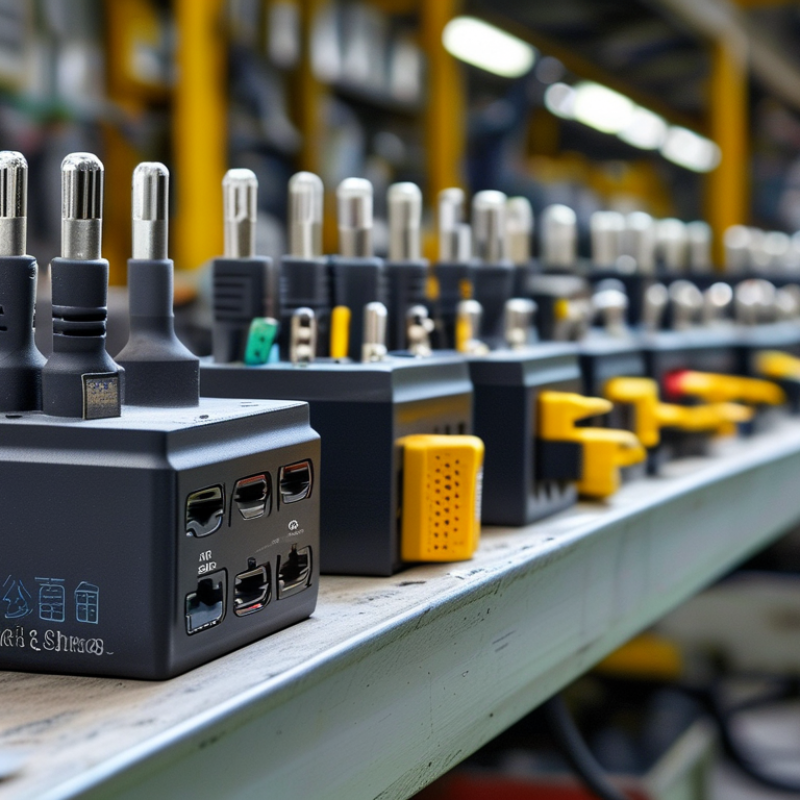
Top Power Adapter Safety Standards for Global Buyers
Power adapter safety standards are practical signals, not decorative approval marks. For global buyers, they show whether an adapter was designed, tested, and documented for safe use. Common references include IEC 62368-1 and relevant national conformity requirements. These standards address electric shock, overheating, fire resistance, insulation, and abnormal operation. The exact requirements vary by destination. A compliant adapter should match local voltage, frequency, plug shape, and grounding systems. Labels matter. An unclear input range is a warning.
Buyers should request a current test report or declaration from the supplier, not just a product photo. Documents should identify the model, rated output, test scope, and intended market. Independent laboratory testing adds useful confidence, especially for large orders. However, a certificate alone does not prove every shipment is identical. Component substitutions, altered housings, or rushed production can change safety performance. Ask how production samples are checked. Ask for traceable records.
Real-world use also deserves attention. An adapter may pass laboratory tests yet fail when ventilation is blocked by bedding or dust. Heat around the casing, loose plugs, and buzzing sounds should never be dismissed. Buyers often focus on price and forget replacement cables or regional instructions. That choice can create avoidable problems. A more honest review admits uncertainty. Standards reduce risk, but they cannot correct careless installation or poor maintenance. Keep invoices, test documents, and inspection notes together. This small habit can make a later quality dispute clearer.
Global power adapters fail most often when buyers treat voltage, frequency, and plug shape as interchangeable. They are not. IEC 60038 identifies 230 V and 50 Hz as common nominal values across many markets, while North America commonly uses 120 V and 60 Hz. Japan is more complicated, using 100 V with either 50 or 60 Hz, depending on the region.
Plug requirements also vary widely.
IEC 60083 lists national plug and socket systems, including different pin sizes, grounding methods, and shutter designs. A two-pin plug may physically enter a socket but still lack protective grounding. That small detail matters near metal equipment, kitchen counters, or damp work areas. Adapter markings should show input voltage, output voltage, current, frequency, and applicable safety certification.
IEC 60884-1 addresses household plugs and socket outlets, while IEC 62368-1 covers safety for many information and communication technology power supplies.
A practical incoming inspection should compare the adapter label with the destination country’s supply. Check the plug first. Then confirm voltage. Finally, verify frequency and polarity.
Many buyers check only wattage, which is a weak habit. A 100–240 V input range is useful, but it does not guarantee plug compatibility or local approval.
I would not trust a vague “universal” claim without test documentation. Labels can be incomplete. Product listings can be worse. Data from the International Electrotechnical Commission remains the safer reference point than assumptions based on travel experience.
For global buyers, certification is not a decorative mark on a power adapter. It shows that defined safety tests were completed. The core reference is IEC 62368-1, which evaluates electrical energy, fire risks, insulation, temperature, and accessible parts. For transformer-based designs, IEC 61558 standards may also apply. The IEC System of Conformity Assessment Schemes for Electrotechnical Equipment and Components, known as the IECEE CB Scheme, can support acceptance across multiple markets.
Regional approval still matters. Europe commonly requires compliance with EN 62368-1, along with CE documentation and applicable electromagnetic compatibility testing. The United Kingdom uses comparable requirements under its national conformity system. North American buyers often request evidence aligned with UL or CSA versions of IEC 62368-1. These are not interchangeable automatically. Check the exact model, input range, plug type, and output rating.
Paperwork can fail.
The European Commission’s Safety Gate 2023 report recorded 3,412 product alerts, showing why traceability deserves attention. A responsible buyer should request the certificate, complete test report, factory address, and production model number. During sampling, measure surface temperature after continuous loading, inspect pin spacing, and check cable strain relief. I have seen small differences between laboratory samples and production units. That weakness is easy to underestimate. Certification marks alone do not prove current compliance; verify issuing-body records and surveillance status before placing a large order.
How to Verify Compliance, Testing, and Product Documentation
Global buyers should verify compliance before approving a power adapter sample. Start with the exact model number, input range, output ratings, plug type, and intended market. Safety requirements can differ between regions, even when the adapter looks identical. A suitable standard may include IEC 62368-1 or another applicable product standard.
Do not rely on a printed compliance mark alone. Request the complete test report, certificate, declaration of conformity, and critical component list. Check whether the report matches the factory, model, enclosure, output circuit, and production revision. A CE mark, for example, is not a substitute for independent test evidence. The testing laboratory should have relevant ISO/IEC 17025 accreditation. Ask for the accreditation scope, not just a laboratory logo.
Practical verification catches details paperwork can miss. Inspect creepage distances, insulation, strain relief, fuse protection, label clarity, and cable temperature after load testing. Compare the production sample with the tested construction. Keep photos and serial records. Product documentation should also include user instructions, warnings, efficiency data, and destination-specific plug information. One uncomfortable lesson is that a valid report may still describe an older design. Recheck every revision. Small changes matter. A thicker enclosure, different transformer, or cheaper capacitor can alter safety performance. When evidence is incomplete, pause the purchase rather than treating assumptions as approval.
Top Power Adapter Safety Standards for Global Buyers
Choosing a safe power adapter starts with the target market, not the plug shape. Check the local voltage, frequency, socket design, and certification rules. For many information-technology adapters, IEC 62368-1 addresses electrical, thermal, fire, and mechanical hazards. However, one report does not guarantee every market accepts the product. The European Commission’s Safety Gate report recorded 3,412 alerts in 2023. Electrical appliances and equipment represented about 7% of notifications. This supports a practical lesson: request complete test reports, not only a printed conformity mark.
For Europe, verify low-voltage, electromagnetic-compatibility, and energy-efficiency requirements. For the United Kingdom, check applicable national rules and plug-fuse details. North American buyers should confirm the correct voltage range, plug configuration, and recognized safety testing. Australia, New Zealand, and Japan require different approval pathways. Small details matter. A poorly fitted plug can create heat at the wall outlet. An adapter rated for 100–240 V may still fail under overload or poor ventilation. I have seen buyers focus on output wattage and overlook cable temperature, insulation distance, and standby behavior.
Tips: Ask for recent laboratory reports, model-specific certificates, and factory quality records. Test the adapter with the intended device, cable, and socket. Check abnormal-temperature results. Do not rely on marketplace photos. Standards change, and supplier documents can age quietly. Recheck requirements before each shipment.
| Target Market | Typical Mains Supply | Common Plug Standard | Primary Product Safety Standard | Market-Access Requirements | Key Safety Checks for Buyers | Recommended Documentation |
|---|---|---|---|---|---|---|
| European Union / EEA | 230 V AC, 50 Hz | Type C, E or F, depending on country | EN IEC 62368-1 for information and communication technology equipment; other product categories may use different applicable standards | Low Voltage Directive 2014/35/EU, EMC Directive 2014/30/EU, RoHS Directive 2011/65/EU and applicable ecodesign rules; CE marking is required when the product falls within applicable legislation | Creepage and clearance, electric-strength testing, protection against electric shock, abnormal-operation testing, temperature rise, EMC performance and correct plug configuration | EU Declaration of Conformity, technical file, test reports from a competent laboratory, risk assessment, user instructions and traceability information |
| United Kingdom | 230 V AC, 50 Hz | Type G | BS EN IEC 62368-1 for applicable ICT and AV equipment | UK Electrical Equipment Safety Regulations, UK EMC Regulations and UK RoHS requirements; UKCA or accepted CE marking route depends on current UK rules and product placement date | Fuse and plug compliance, insulation system, touch-current limits, thermal protection, fire enclosure performance and EMC emissions | UK Declaration of Conformity where applicable, technical documentation, safety and EMC test reports, product labels and English instructions |
| United States | 120 V AC, 60 Hz | Type A or B | UL 62368-1 or another applicable U.S. product-safety standard recognized by the relevant certification body | Certification by an OSHA-recognized Nationally Recognized Testing Laboratory may be required by workplace authorities, retailers or end users; FCC Part 15 applies to applicable unintentional radiators; federal energy-efficiency rules may apply to external power supplies | NRTL certification scope, output overvoltage and short-circuit protection, fire enclosure, leakage current, abnormal-operation testing, plug polarity and DOE energy-efficiency level | NRTL certificate, FCC compliance records where applicable, energy-efficiency test data, critical-component list, ratings label and installation instructions |
| Canada | 120 V AC, 60 Hz | Type A or B | CSA C22.2 No. 62368-1 or another applicable Canadian electrical safety standard | Electrical certification is generally expected for products connected to the Canadian power grid; certification should be issued by a body accredited by the Standards Council of Canada; applicable radio-interference requirements may also apply | Canadian certification mark, input and output ratings, grounding or double-insulation construction, temperature rise, dielectric strength and cord or plug suitability | Canadian certificate, construction review, electrical safety test report, bilingual English/French labeling and user documentation where required |
| Australia / New Zealand | 230 V AC, 50 Hz | Type I | AS/NZS 62368.1 for applicable ICT and AV equipment; the applicable standard depends on the product category | Regulatory Compliance Mark framework, electrical-equipment safety obligations, electromagnetic-compatibility requirements and supplier registration in the relevant national database where required | Australian plug and pin configuration, insulation coordination, earth continuity where applicable, fire enclosure, touch current, EMC and power-consumption performance | AS/NZS test report, supplier declaration, product registration records where applicable, rating label and local instructions |
| Japan | 100 V AC, 50 or 60 Hz | Type A | J62368-1 or another applicable Japanese safety standard, depending on product classification | Electrical Appliances and Materials Safety Act; PSE requirements, conformity-assessment route and required testing depend on whether the adapter is classified as a specified or non-specified electrical appliance | Correct PSE category, Japanese marking format, insulation and dielectric strength, plug dimensions, temperature rise and protection against abnormal conditions | Japanese conformity records, required PSE documentation, test reports, Japanese-language rating information and importer or supplier records |
| China Mainland | 220 V AC, 50 Hz | Type A, I or compatible Chinese plug configuration | GB 4943.1-2022 for applicable audio/video, information and communication technology equipment | China Compulsory Certification may apply according to the product catalogue and classification; applicable electromagnetic-compatibility, energy-efficiency and hazardous-substance requirements must also be assessed | CCC scope verification, GB-standard test methods, creepage and clearance, fire enclosure, abnormal-operation safety, output stability and Chinese labeling | Chinese conformity certificate where applicable, GB test report, factory information, Chinese rating label and user instructions |
| India | 230 V AC, 50 Hz | Type C, D or M, depending on installation | IS 13252 (Part 1) for applicable information-technology equipment; the notified product list and current transition rules should be checked | Bureau of Indian Standards Compulsory Registration Scheme may apply to power adapters for specified equipment categories; applicable registration, labeling and energy-efficiency rules must be confirmed before import | BIS registration scope, input surge protection, insulation, leakage current, overload and short-circuit protection, temperature rise and Indian plug compatibility | BIS registration details where applicable, Indian test report, product label, critical-component records and local-language instructions if required |
| Brazil | 127 V or 220 V AC, 60 Hz | Type N | Applicable Brazilian safety standard, often based on the relevant IEC standard and identified in the applicable conformity scheme | INMETRO conformity requirements may apply depending on the adapter classification and current product regulations; Brazilian electrical-plug and socket requirements are based on NBR 14136 | Correct 127/220 V rating, plug configuration, insulation, dielectric strength, overload protection, thermal performance, Portuguese labeling and applicable conformity route | Applicable INMETRO certificate or declaration, laboratory test report, Portuguese instructions, rating label and importer compliance records |
| South Korea | 220 V AC, 60 Hz | Type C or F | KS C IEC 62368-1 or another applicable Korean safety standard | KC safety certification or confirmation requirements may apply according to product classification; electromagnetic-compatibility registration may be separate | KC classification, insulation, leakage current, temperature rise, abnormal-operation performance, Korean plug compatibility and EMC requirements | KC certificate or confirmation record, safety and EMC reports, Korean labeling and user documentation |
: It shows that the adapter was designed, tested, and documented for safer use. It is not a guarantee. Standards address shock, overheating, fire resistance, insulation, and abnormal operation.
Check input voltage, output voltage, current, frequency, polarity, and plug design. Match them with the destination market. Wattage alone is insufficient.
It supports many voltage systems, but it may not fit every socket. Local approval, frequency, grounding, and plug protection still matter. “Universal” can be vague.
No. A certificate may cover one model or production sample. Later component substitutions can change performance. Request current reports and traceable factory records.
Request a model-specific test report, conformity declaration, rated output, and test scope. The documents should identify the intended market. Photos are not enough.
Compare the label with destination requirements. Inspect the plug, cable, casing, and grounding parts. Test the adapter with the intended device and socket.
Excessive casing heat, buzzing, loose plugs, damaged insulation, and unusual smells require attention. Blocked ventilation can increase heat. Stop using it if conditions worsen.
A suitable adapter can still create problems with an unsuitable cable. Regional instructions should explain input limits, ventilation, and proper connection. Small omissions matter.
Keep invoices, inspection notes, test documents, and shipment records together. Recheck requirements before each order. I would not assume past approval remains current.
For global buyers, understanding power adapter safety standards is essential for protecting users, connected devices, and electrical systems. What safety standards apply to power adapters depends on the destination market, product design, voltage range, frequency, plug configuration, insulation, grounding, temperature control, and protection against overload or short circuits. Since electrical requirements vary worldwide, an adapter suitable for one country may not be appropriate for another without the correct input specifications and plug format.
Buyers should review relevant international and regional certifications, test reports, conformity documents, and manufacturer declarations before making a purchase. Documentation should clearly identify the tested model, rated input and output, safety protections, test laboratory, and certification validity. Choosing an adapter for a specific target market requires matching voltage, frequency, plug type, power capacity, and local compliance requirements. Careful verification helps reduce safety risks, avoid compatibility problems, and support reliable international distribution.

Laisen Electronic