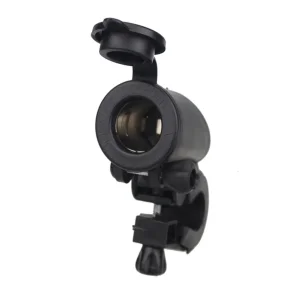
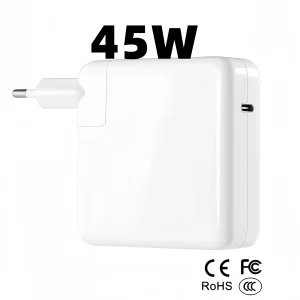
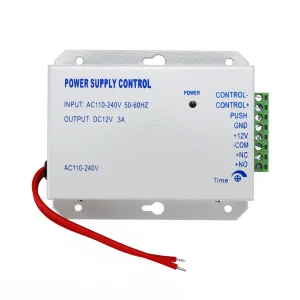
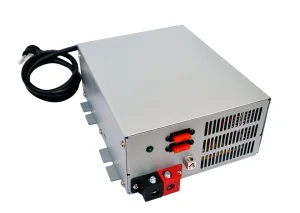
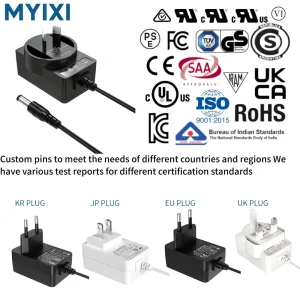
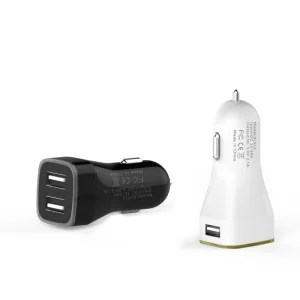
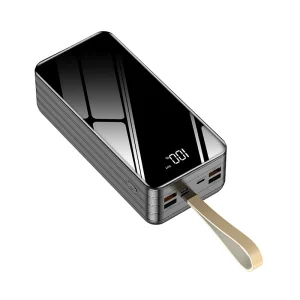
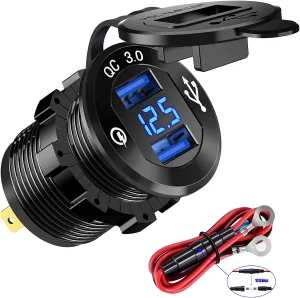
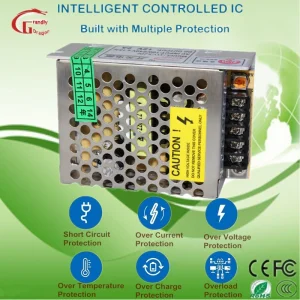
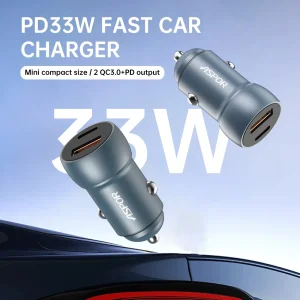
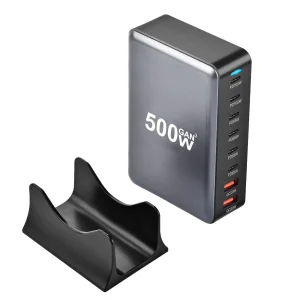
Guangdong Laisen Electronic Technology Co., Ltd. (founded 1983) represents the pinnacle of China's power electronics manufacturing. Operating from a massive 20,000 square meter facility in Dongguan with over 700 dedicated employees, Laisen specializes in a wide spectrum of USB chargers, switching power supplies, PD adapters, and MFi cables. Our commitment to E-E-A-T (Experience, Expertise, Authoritativeness, Trustworthiness) is reflected in our ISO9001 and ISO14001 certifications, ensuring every unit leaving our factory meets international regulatory standards like UL, CE, FCC, and PSE.
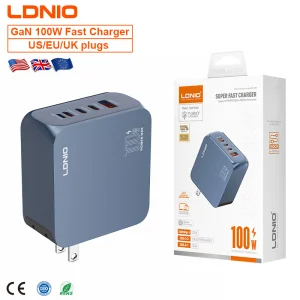
The travel adapter market is undergoing a seismic shift towards high-density integration. Our engineering teams are pioneering the adoption of Gallium Nitride (GaN) technology. By replacing silicon with GaN, our chargers offer:
In a volatile global economy, supply chain stability is the most critical asset for B2B importers. Dongguan remains the global epicenter for consumer electronics manufacturing. Laisen leverages this ecosystem to ensure:
Our chargers are not just products; they are solutions tailored to global environments:
For international trade, compliance is non-negotiable. Laisen products are engineered with a "compliance-first" mindset. Our in-house R&D performs rigorous testing to meet:
This ensures our partners in the US, Europe, Australia, and Asia can launch products immediately without regulatory friction.
Q: What makes Laisen chargers more reliable than generic options?
A: Laisen integrates full-process quality control, from IQC (incoming quality control) to automated aging tests. Unlike low-cost generic manufacturers, we adhere to global safety standards (UL/CE) and use certified components.
Q: Can Laisen handle custom logo and packaging for small-batch B2B orders?
A: Yes, we provide OEM/ODM services. Our flexible production lines allow us to support both large-scale orders and specialized branding requirements for our partners.
Q: How do you ensure charging safety for advanced devices?
A: Our chargers incorporate multiple protection protocols, including over-voltage, over-current, and short-circuit protection, regulated by intelligent chipsets to prevent device damage.
 Laisen Electronic